• Donate
  • Log In
Home
  • About
    • About
      • About Us
      • Our Board of Directors
      • Board Meeting Minutes
      • Board Elections
      • Updates & Announcements
      • Our Staff
      • Governance & Financials
      • Lifetime Achievement Award
  • Events
    • Events
      • Upcoming
      • Past
      • Conference FAQ
      • Conference Policies
      • Code of Conduct
      • Calls for Papers
      • Author Resources
      • Grant Opportunities
      • Best Papers
      • Test of Time Awards
  • Join & Support
    • Join & Support
      • Become a Member
      • Ways to Give
      • Our Supporters
      • Student Opportunities
      • Sponsorship Opportunities
  • Archive
    • Archive
      • Proceedings
      • Multimedia
      • ;login: Archive
      • Short Topics in System Administration Series
      • Journal of Education in System Administration (JESA)
      • Journal of Election Technology and Systems (JETS)
      • Computing Systems Journal
  • Search

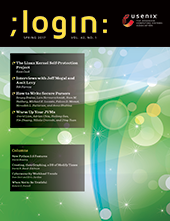
Interview with Jeff Mogul

Author(s): 

Rik Farrow

I’m sure I met Jeff Mogul at a USENIX systems conference, but I can’t remember which one. I had heard that Jeff was involved with the early Internet, but later than the groundbreaking work of Internet founders like Vint Cerf and Bob Kahn. And although I occasionally talked with Jeff, I knew little about him.

I did suspect he could shed some light on what it was like to manage an Internet connection in the mid-’80s and to help shape parts of TCP/IP. Jeff had also worked for Digital Equipment Corporation’s (DEC) Western Research Lab. WRL was a small research lab in Palo Alto that produced a lot of pragmatic work and many papers too.

Download Article: 
PDF icon Interview with Jeff Mogul (PDF)
Article Section: 
OPERATING SYSTEMS
;login: issue: 
Spring 2017, Vol. 42, No. 1
USENIX logo
  • Contact USENIX
  • Privacy Policy

© USENIX 2025
EIN 13-3055038

Website designed and built by Giant Rabbit LLC
Powered by Backdrop CMS

We need contributions from individuals like you.

USENIX conferences directly influence the development of computing systems and products used worldwide. Contribute today to support this vital work for the next 50 years.

Secure the Future of USENIX

Donate
Close