


With the measured energy of the transmission and the size of data file, the energy required to send or receive a bit can be derived. The results of these network benchmarks appear in Figure 3 and are consistent with other studies [20]. The card is set to its maximum speed of 11Mb/s and two tests are conducted. In the first, the Skiff communicates with a wireless card mere inches away and achieves 5.70Mb/sec. In the second, the second node is placed as far from the Skiff as possible without losing packets. Only 2.85Mb/sec is achieved. These two cases bound the performance of our 11Mb/sec wireless card; typical performance should be somewhere between them.
Next, a microbenchmark is used to determine the minimum energy for an ADD instruction. We use Linux boot code to bootstrap the processor; select a cache configuration; and launch assembly code unencumbered by an operating system. One thousand ADD instructions are followed by an unconditional branch which repeats them. This code was chosen and written in assembly language to minimize effects of the branch. Once the program has been loaded into instruction cache, the energy used by the processor for a single add is 0.86nJ.
From these initial network and ADD measurements, we can conclude that sending a single
bit is roughly equivalent to performing 485-1267 ADD
operations depending on the quality of the network link (
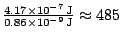 or
or
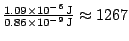 ). This gap of 2-3 orders of
magnitude suggests that much additional effort can be spent trying to
reduce a file's size before it is sent or received. But the issue is
not so simple.
). This gap of 2-3 orders of
magnitude suggests that much additional effort can be spent trying to
reduce a file's size before it is sent or received. But the issue is
not so simple.
![\includegraphics[height=3in, angle=-90]{figures/network-energy.eps}](img15.png)